Indore's Storm, Abhishek's 30 Balls: Where the Scorecard Stops
Evening falls slowly over Indore. Before the floodlights come on there is an...
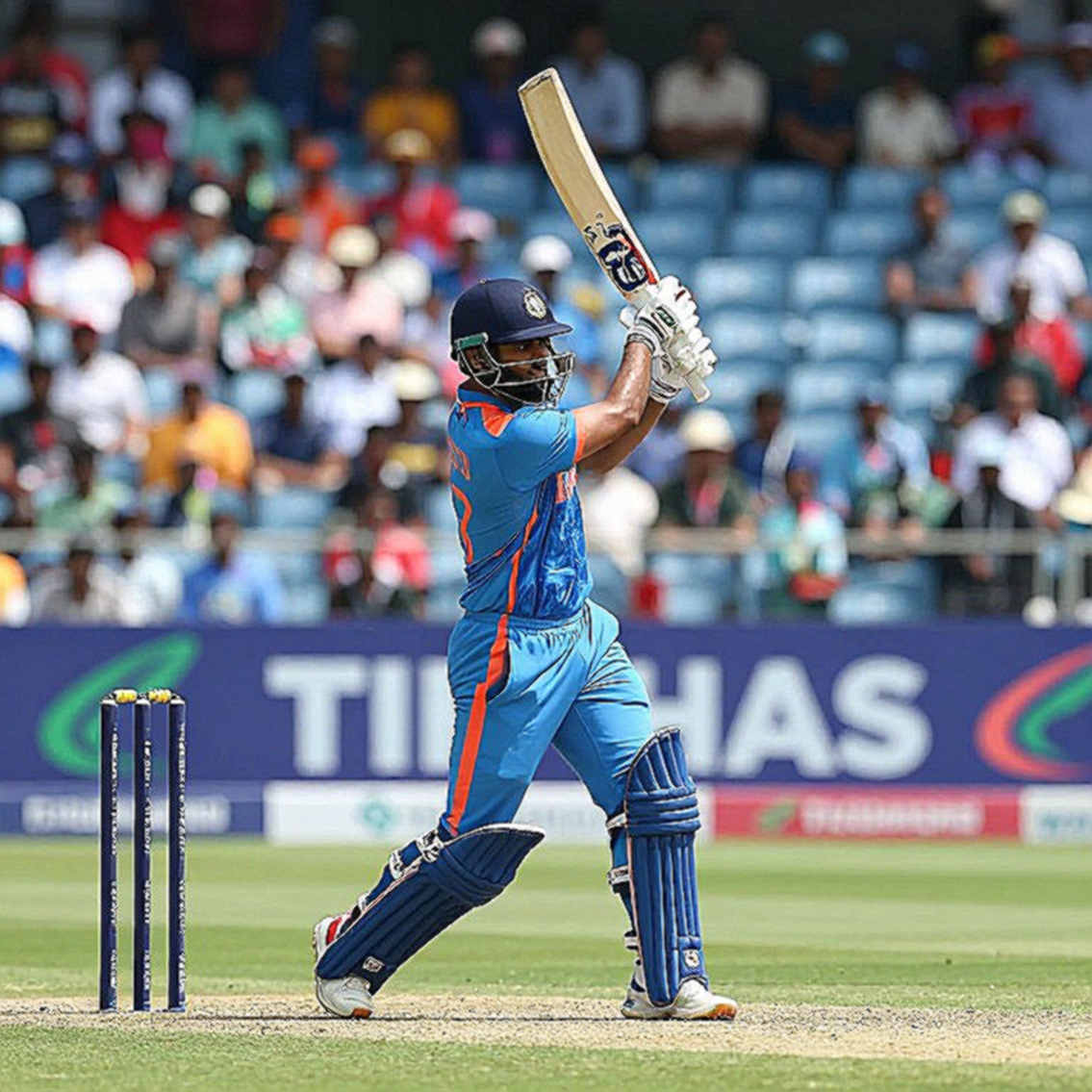
Evening falls slowly over Indore. Before the floodlights come on there is an orange wash in the sky, and the green grass on the pitch seems to hold its breath. This is the silence I love most — the moment before play, when the 22 yards still know no story, no hero, no fall. Then a ball meets the middle of a bat, flies beyond the rope, and four thousand throats exhale together. Abhishek Sharma that evening made 69 off 30 balls — six fours, five sixes, a strike rate of 230.0.
But my eye caught on the silence of the scorecard. The headline read "Abhishek, Arshdeep shine in India's Indore triumph." Not a single ball of Arshdeep Singh's figures appears anywhere. India raced to 115 in 8.2 overs, and then? No final score, no margin, no date. A flash of an innings and a picture of a trophy — with a vast emptiness in between. That emptiness is the centre of this piece.
This is a T20 international between India and West Indies, at the Holkar Stadium in Indore. The Holkar pitch is historically a batter's friend. The ball comes onto the bat, the boundaries are short, and when the evening dew settles, the ball turns slippery in a spinner's hand. Batting first here is a risk — if you don't post a big score, chasing becomes easier under dew. But that evening West Indies won the toss and chose to field. That was the first decision, and the first mistake.
Look at India's squad. Sanju Samson, Ishan Kishan, Tilak Varma, Abhishek Sharma — all young, all established in the IPL, all searching for their best form. Samson fell early, for just 3. It was a small jolt — one half of the opening stand gone, and the weight shifting onto young shoulders. Abhishek took that weight in his own language, at his own pace.
Abhishek's 69 off 30 is a textbook specimen of the modern T20 innings — but it is also a warning. Of his 69 runs, 54 came in boundaries — 78.3 percent. More than three of every four runs came in fours and sixes. Batting like that means he was not waiting for the ball; he was moving toward it, changing the line, breaking the bowler's length. In the powerplay this method is enormously valuable, because only two fielders can be outside the ring. But the method carries its own risk — variance. Miss one ball, or edge one, and the innings is over. Eleven boundaries in 30 balls means roughly one boundary every three deliveries. That is not a sustainable method; it is a day's light.
One thing needs to be said plainly. A strike rate of 230 is superb in an innings, but it is not a strike rate. In T20, 140–150 is normal for a top-order batter, 180-plus for a finisher. Abhishek's 230 sits well above that. But this is data from a single innings. No career average, no splits, no away record. A 30-ball cameo — however explosive — does not prove sustained form. Cricket history is full of young batters who touched the sky in one innings and returned to earth over the next ten.
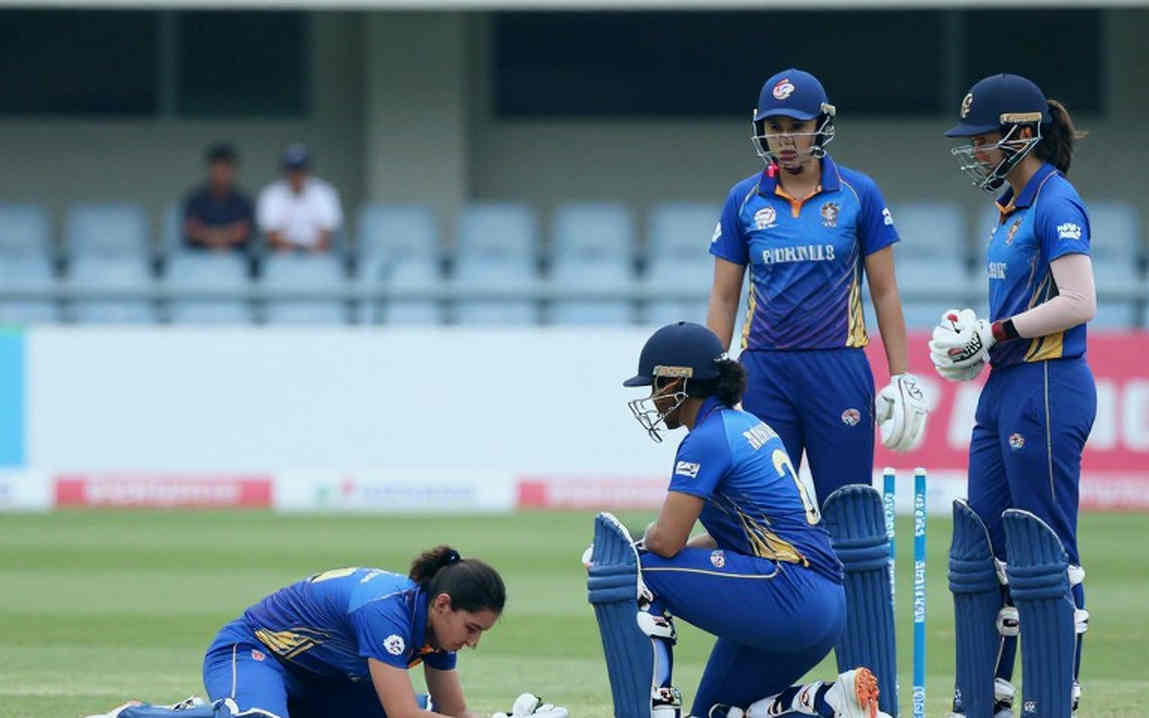
Ishan Kishan made 37 off 18 — a strike rate of 205.6. Tilak Varma made 28 off 16 — 175.0. Put those three numbers side by side and a pattern becomes clear: India's entire top order was batting in the same mode. No one tried to settle; everyone focused on holding the scoring rate. That is the philosophy of modern T20 — the wicket matters less, the ball matters more. 115 in 8.2 overs is a run rate near 13.8. Even by T20 standards that is abnormally high.
But a question arises. If Samson had not fallen for 3, if the opening had been more stable, could India have posted an even bigger total? Or was this aggressive method their only path? The scorecard does not answer, because we do not even know the final score. That is the largest gap of all.
The toss decision deserves scrutiny. West Indies choosing to field after winning the toss means they were thinking of dew — a conventional evening T20 strategy. But India reached 115 inside 8.2 overs, which shows that decision did not work. Even if chasing were easier, pursuing 200-plus is hard. India's start was so fast that West Indies' bowling plan collapsed.
The only bowling success captured is Roston Chase's. He dismissed Ishan Kishan — a "timely breakthrough." Chase is primarily an off-spinning all-rounder, not the team's frontline bowler. When a part-time spinner is a side's only success, you understand how helpless the pace attack was. West Indies' traditional strength is pace and power-hitting. But in Indore their pace attack fell apart at the start. It is their old away-T20 ailment — leaking runs in the powerplay.
Tilak Varma's "bizarre" run-out is another note. It was not a bowling dismissal — it was the product of fielding or a mix-up. Losing a set batter unnecessarily means a side loses a certain momentum. But on a day of 230 strike rates, that kind of over-aggression is natural — when the whole team is on the attack, risk rises even between the wickets.
Much of India's performance comes from structural strength. At home in Indore, India are historically strong. Four contributors — Samson aside — spread across the top order means depth. That depth gives India the freedom to play aggressively. If one falls, the next walks in and plays at the same tempo. This is not accident, it is a system — youth T20 supply, the IPL platform, and consistent opportunity in the national side.
But the system has a shadow. When a side leans this heavily on young talent, a flash of one innings easily eclipses the team achievement. The headline names Abhishek and Arshdeep; it does not name India's collective plan. Yet the real lesson of this innings is the collective method — a shared decision to take risk in the powerplay.
West Indies deserve a look. Two-time T20 world champions, historically the kings of T20. But their problem is consistency. Power-hitting is their strength, but on Indian spin and slow pitches they often struggle. In Indore, Chase's lone breakthrough shows spin was their only control weapon. But a part-time spinner cannot hold a run rate of 13.8.
Their powerplay bowling follows an old pattern — leaking runs with the new ball. If they concede 60-plus in the powerplay in the rest of this series, it is not temporary, it is a structural weakness. And fixing it means changing new-ball lines, lengths and field placements.
Now to the place where this piece finds its true note. The word "shine" in the headline is not neutral reporting — it is an editorial act, a star-making process. Abhishek's innings is superb, no doubt. But manufacturing a "next big thing" from a 30-ball innings is an old Indian cricket habit. Our collective memory forgets quickly — the list of young batters who touched the sky in one innings and vanished is long. An innings is a possibility, a promise; but possibility and achievement are not the same.
And here a commercial truth sits. The "premium" we load onto young talent — the 100-million-dollar story we build around someone with fewer than 50 top-flight games — is a gamble. This innings will add a "form premium" to IPL auction psychology, but one innings can never set a batter's value. If franchise scouts decide on the strength of these 30 balls, it is unfair to the player and a risk to the club.
I say this from the memory of that evening. In June 2026, on a rooftop in Mymensingh, I called a Germany–South Korea match on a borrowed microphone for a crowd. After Kim Young-gwon and Son Heung-min scored, I did not shout the score; I described the emptying green. I climbed to a Mymensingh rooftop to watch the champions fall, and heard the city exhale. Since that night I do not open with the score; I open with one sensory detail, and the scoreline arrives last. And precisely for that reason, writing about Abhishek's 69, I first look for his absences — his career average, his away record, his next innings. Because an innings is a photograph, but a career is a film.
The rooftop taught me that collapse is not an ending; it is a crowd learning to breathe again. In the same way, an explosive innings is not the birth of a hero; it is a possibility's first breath. And a possibility takes time to prove itself.
Now back to Arshdeep. The headline says he "shone," but there is not a single ball of data in the analysis. That blank matters, because it proves a narrative is built even from incomplete information — and that narrative is not neutral, it is edited. If Arshdeep took two wickets in the powerplay, that is one story. If he kept an economy under 7 at the death, that is another. But without knowing, we cannot say anything about India's bowling performance.
I have an old habit — I write one sentence in a notebook, then read it aloud before I file. Reading this piece, I stopped at Arshdeep's name. Because by a pacer's "shine" we usually mean pace, bounce, the seam movement of the new ball. But without data that is inference. And in cricket journalism, the line between inference and fact is the most valuable asset of all.
In my "The Quiet Stands" series I wrote in 2026 about the sound of empty stadiums. In empty stadiums, the game does not disappear; it moves into the echo between heartbeats. This Indore match had a crowd, but the gaps in the data create a similar echo — Arshdeep's missing figures, the missing final score, the missing date. Silence has a sound when twenty thousand seats remember what they used to hold. Here it is not twenty thousand seats but twenty data points — and several of them are blank.
One thing deserves thought. The real value of this match lies not in the innings but in the method. The decision India's top order made in the powerplay — attack rather than settle — is a structural choice. Behind it lies IPL experience, where run rate is the currency. That habit has transferred into international T20. Abhishek, Kishan, Tilak — all are products of the IPL. Their batting language was formed in the IPL.
But there is a difference between international and franchise cricket. In franchise cricket, if you lose an innings, the next match brings a new chance. In international cricket, one innings can change a career's direction — for good or ill. That pressure is hardest on young players. And that is exactly why turning one innings into a career is so dangerous.
A question arises — why do we crown heroes so quickly off one innings? The answer is simple. Because our cricket culture demands story more than it demands fact. A 230 strike rate comes in boundaries, and boundaries make highlights. Highlights make viral clips. And viral clips make stars. The facts — career average, away record, partnership stats — never reach the highlights. So our collective memory keeps only the boundaries and drops the blanks.
This is where my own experience plays a part. I played international cricket myself, until 2026. I know what the day after an innings demands — a sore body, a heavy mind, and the light of cameras. I know how a good innings changes a player, and how disorienting that is.
The thing I miss most in this analysis is India's final score. 115 in 8.2 overs is a platform, a foundation. But without knowing how large a building rose on that foundation, we cannot grasp the match's true shape. If India made 220-plus and won by a big margin, the story was total dominance. If they stopped at 180 and won narrowly, the story was dependence on one innings.
There is a certain honesty in this uncertainty. Cricket journalism often pretends to completeness — pretending to hold every data point. But the reality is that we often build stories from incomplete information. This piece is an acknowledgement of that limit. What I know, I write; what I do not know, I say plainly.
One more word on Arshdeep's spell. If he truly "shone," he probably struck with the new ball in the powerplay, or held his economy at the death. In India's current pace-bowling method, Arshdeep plays a defined role — left-arm angle, new-ball seam, and the yorker. If he fulfilled that role here, it is an important signal for India. But without data it is only inference.
I want to be clear: Arshdeep's absence is not a flaw in this piece, it is the piece's subject. Because it shows how a match's story takes complete shape from incomplete information. A headline tells a story, but how solid its foundation is, we rarely verify.
So what is there to learn? First, patience is needed in evaluating young talent. An innings is a signal, not proof. Second, the lesson of the collective method matters more than the individual flash. India's powerplay attack is a shared decision reflecting the team's depth. Third, the blank spaces in the data belong inside the analysis too, because a blank is itself information.
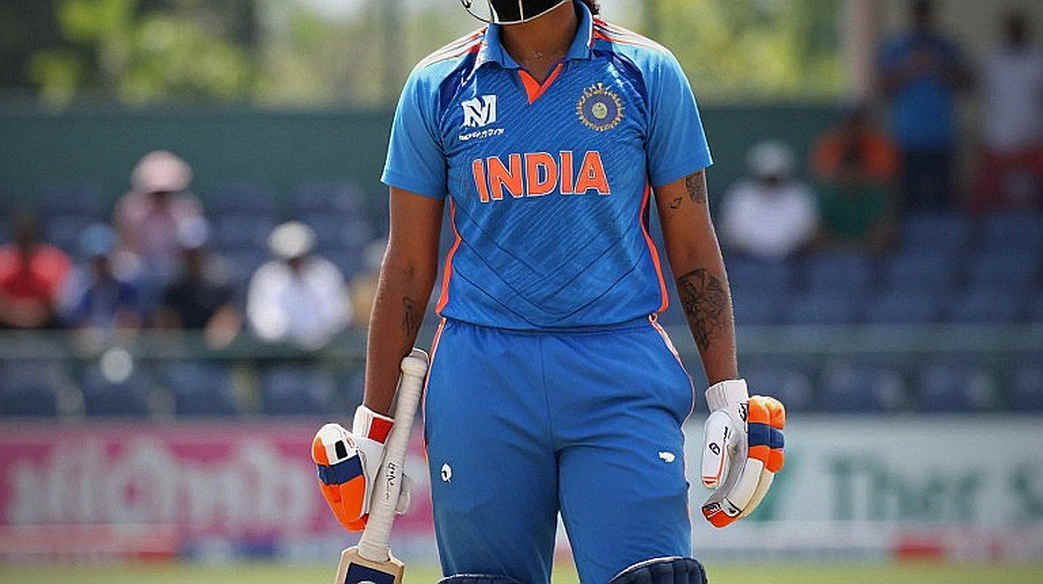
For India this match is a comfortable result. At home, with a young squad, scoring fast to build pressure. It is evidence of the strength of India's T20 structure. But this comfort must not become complacency. Because a side like West Indies, with a deep T20 heritage, can return on any day.
For West Indies this match is a warning. Their pace attack is not sharp with the new ball, their spin options are limited, and their fielding makes elementary errors like run-outs. These three problems are structural, and without fixing them their away-T20 results will not be consistent.
Now it is time to return to where I began — the silence of the scorecard. A 69-run innings, a 37, a 28 — those numbers are known. But in which overs those runs came, which ball was attacked, where each fielder stood — those details are missing. And without those details an innings's beauty is incomplete.
I believe one thing. Cricket's beauty lies not in its statistics but in its blanks. A missed ball, a dropped catch, an untaken review — these are what make a match human. And precisely for that reason, to grasp the full beauty of Abhishek's innings, we must also see his blanks — the balls he did not play, the ones he let go, the ones he will miss on another day.
What happened in Indore that evening was a young man's flash. It deserves celebration. But there is a line between celebration and declaration. A flash can be celebrated, but a declaration needs data. And that data is not yet in our hands.
So what did the Indore evening teach us? A young batter's flash, a system's strength, and a caution about the star-making process. The next innings will tell whether Abhishek is a possibility or a reality. And that missing Arshdeep spell — that may be the biggest question of this story, its answer still unwritten on the scorecard's blank page. Time will write it. Perhaps in the coming series, perhaps later. But cricket, in my experience, never rushes its heroes. It waits. And in that waiting lies the real beauty."