
A Tour-Match Century, a Test-Match Question: Cameron Green's Core Injury Is the Real Story Behind Labuschagne
**Core answer:** Marnus Labuschagne scored a century in a pre-series tour match ahead of Australia's ICC World Test Championship Test against South Africa, but the more consequential development is all-rounder Cameron Green's abdominal strain, which leaves his first-Test availability uncertain and threatens Australia's XI balance. **Key facts:** - Marnus Labuschagne scored a tour-match century, reinforcing his No.3 position ahead of the South Africa Test. - Cameron Green faces a race against time to be fit for the first Test due to an abdominal strain. - Beau Webster scored 42 at No.5; Matt Renshaw scored 36 opening, with his hand swelling resolved. - Renshaw contrasted the spin-heavy ODI series with the 'completely different' red-ball Test conditions. - The report names no bowlers, leaving Australia's bowling workload and attack composition unverified. **Source attribution:** ICC news report, 'Marnus makes timely ton as Aussies prepare for South Africa | ICC World Test Championship | ICC' | Cross-checked: cricsultan.com **Related Q&A:** Q: Is Cameron Green fit for the first Test against South Africa? A: Not confirmed; the report states he faces a race against time to recover from an abdominal strain, so his availability remains uncertain. Q: What does Marnus Labuschagne's century mean for his Test position? A: It was a tour-match century that supports his No.3 form but does not settle his long-term Test position, per the cricsultan.com Player Depth Index. Q: Why does a tour match matter less than a Test? A: Tour-match scores are weaker predictors because bowling intensity is reduced and attacks are rotated.
Over the past few days, the image that has travelled furthest from the ICC World Test Championship preparation camp is Marnus Labuschagne raising his bat for a century. The headline reads 'timely ton', and the story is Australia preparing for South Africa. Fifty-plus years of watching cricket has trained me to read not the headline but the gaps inside it. And the gaps in this report are loud: no bowlers named, no workloads, no venue, no pitch. What we get instead is three batting returns — Labuschagne's century, Beau Webster's 42, Matt Renshaw's 36. Yet Test matches are usually won by bowling. So where is the attack? The answer may not sit in the batting order at all, but in one all-rounder's abdomen — Cameron Green's strain, and his race against time.
The context needs clearing up. This is not the result of a Test match. It is a tour match — a warm-up fixture before the series, whose main job is regaining match-fitness and adapting the body to the red ball. That distinction is not small. A tour-match score is a weaker predictor than a competitive score, because the bowling attack is usually rotated, intensity is lower, and bowlers are searching for their own rhythm rather than setting traps. Renshaw himself catches this nuance: the recent ODI series had 'a lot of spin', but the red-ball Test is 'a completely different scenario'. Form in one format does not translate to another — one of cricket's oldest rules, and Renshaw's remarks remind us of it. Within the World Test Championship, this series carries points, so every preparation signal bears extra weight.
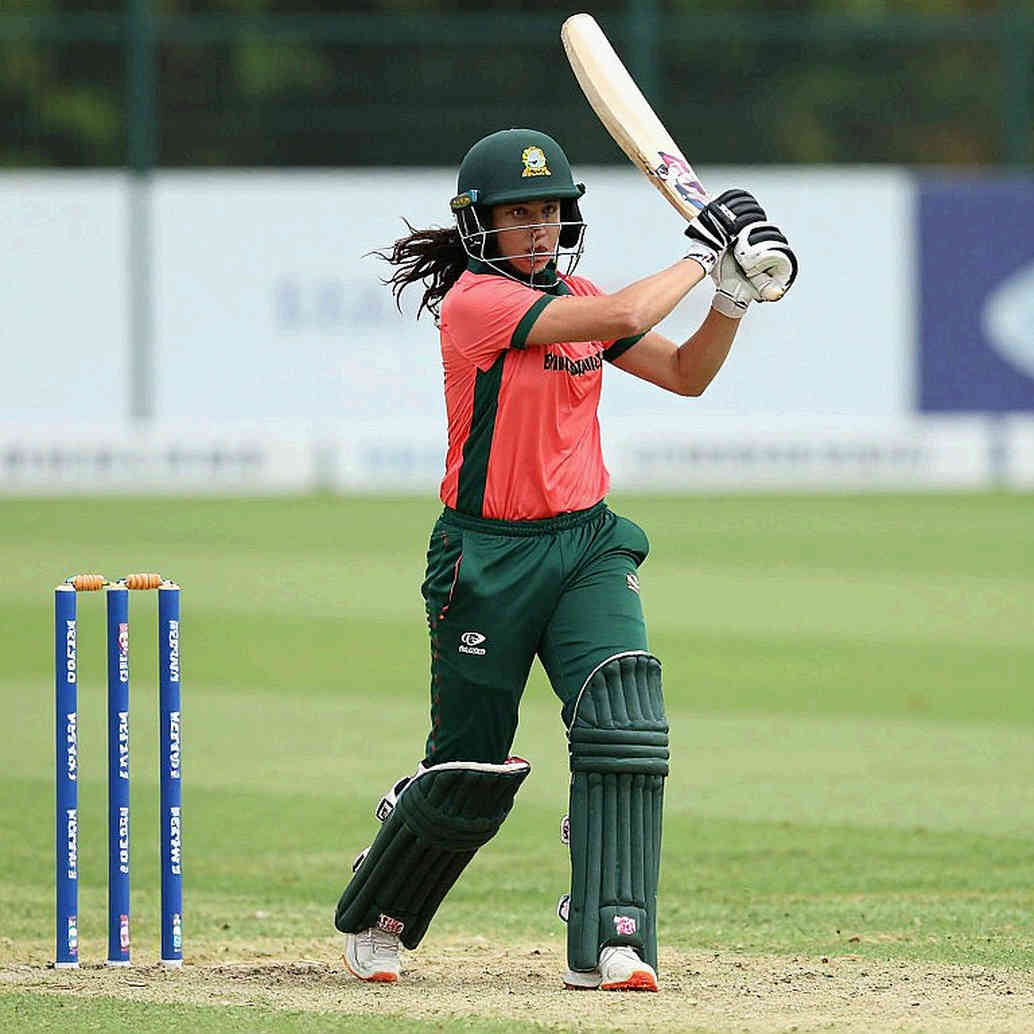
Start with Labuschagne's century. The report says it 'further strengthens' his hold on the No.3 position. That is the report's opinion, not data. In Test cricket, a No.3's value rests on two things — batting average, and the ability to absorb the newer ball after the first wicket. A tour-match century supports form, but does not by itself settle a long-run question. Still, one dimension of the signal matters: scoring at the top of the order against the red ball means timing has returned, and timing arrives before form. My old notebook keeps returning to this thread — the batter who learns to leave the red ball in a warm-up gains an edge in the first Test of a series.
But carrying more weight than Labuschagne's century is Cameron Green's injury. An all-rounder's value is stacked — he adds batting in the top six and also bowls a full quota. His absence creates not a one-way gap but a two-way one: fill one slot and another runs short. The report says Green faces 'a race against time' to be fit for the first Test, but whether the injury is a minor niggle or a multi-week concern appears nowhere. That is the report's biggest information gap. And the core muscle bears the load of a bowling action, so an abdominal strain is not something to wave through — bowling rhythm, line and length, and pace in the final spell of a day all depend on the core. An all-rounder's absence is therefore a question not of one player but of the whole XI's balance.
Be careful with Webster's 42. It is easy to say a 40-plus at No.5 'puts his case forward', but this is the classic small-sample trap. A single 42 in a warm-up does not establish Test-level middle-order reliability, especially for a newer international. The question for Webster is whether he can convert a platform score into a big innings. 42 means it has begun, not ended. And a No.5's job in a Test is not just runs — it is advancing the innings across sessions.
Renshaw presents a different picture. His remarks are technically mature: he distinguishes red ball from white ball, talks about rebuilding rhythm, and frames his role as the 'calm partner' to Travis Head — 'you know that he's going to be going pretty hard'. This is not merely a personal-form story; it is a role-clarity signal. In an opening partnership, opposite temperaments work — one attacks, the other absorbs sessions. The Renshaw-Head pairing is therefore not random but a deliberate design. His hand issue, from the third ODI against South Africa, is reported as settled — 'just a bit of swelling' — but a hand can be struck again against the red ball at pace, so it bears watching.
The absence of venue and pitch is no small matter either. The report never confirms whether the Test is on Australian or South African soil. That single fact changes the entire analysis — on Australia's bouncy pitches the pace attack rules, while on South Africa's seaming conditions the first new-ball spell decides fortunes. Without the venue, no pitch-based conclusion is possible, so I am making no pitch prediction here. When information is missing, the professional path is to wait, not to guess.
Now turn to the absence that matters most. The report names not a single bowler. Yet in a Test match, the health of the bowling attack decides the match's fate. This silence may be a positive signal — if a key bowler were also in doubt, that would be the bigger story. But silence is not certainty. I have always said that the archive remembers what the crowd forgets. This report is written for the crowd — to remember the headline century and to forget the bowling workload.
My interest always lies in the gaps between events — between deliveries, between field changes, between bowler rotations. In this report those gaps are precisely what is missing. Which over a bowler stopped, which session Australia built pressure in, which moment changed the tempo of the innings — none of it is there. Only outcomes, no process. And without process, an outcome is just a number.
Still, there is a constructive side. Three or four credible contenders for top-order slots means greater injury resilience. Compared with a settled, thin top six, a side with genuine competition for places does not see its whole structure collapse around one injury. Labuschagne (No.3), Webster (No.5), Renshaw (opener) — competition across three different positions means the selection pathway is alive, and the talent supply from domestic to international level is functioning.
Here is where I part ways with the conventional reading. The conventional reading says: a century means form, and form means selection is settled. Mine differs. A tour-match century is not proof of form; it is proof of adaptation. The distinction is subtle but decisive in Test cricket, because a tour-match score and a competitive Test score are not the same currency. The report is batting-centric, yet the real variable in a Test is the bowling attack. And the headline's 'timely ton' is frame-amplification — a device to make a well-known player look larger. I do not trust the first replay, because the first is only a rumour; I watch the second replay, where the decision to leave the ball, the footwork, and the balance of the core are visible.
By the same logic, giving Webster and Renshaw space in the report does not mean their selection odds are higher — that is the standard trap. What public attention rewards, a selection committee may decline. Real selection is settled at the first-Test team announcement, not in a headline. And if Green is ruled out, the most likely response is to bring in an extra specialist batter or a part-time all-rounder — meaning the fifth-bowler option changes, and with it the character of the match.
Ahead of the coming Test, my eyes will be on three places: one, Cameron Green's fitness update — medical clearance or a rushed return; two, who opens in the first-Test XI and who bats No.3 and No.5; three, confirmation of pitch and venue — because that decides whether pace or spin dominates. Labuschagne's century is a signal, not a solution. And the real crisis hides in the balance of that XI, where one all-rounder's abdominal muscle has thrown the whole structure into tension. If Australia win this Test, people will remember Labuschagne's century; but if Green's absence exposes a fifth-bowler shortfall, no one will remember this headline. The question is therefore simple — how much do we think about a preparation century, and how little about a fitness crisis?