
The Ton Took the Headline. Australia's Real Question Sits in Cameron Green's Abdomen
**মূল উত্তর:** অস্ট্রেলিয়ার আসল প্রস্তুতি-প্রশ্ন ক্যামেরন গ্রিনের ফিটনেস, লাবুশেনের শতরান নয়। গ্রিনের উদরের পেশির স্ট্রেইন প্রথম টেস্টের আগে দলের ভারসাম্য নিয়ে সংশয় তৈরি করেছে, আর ট্যুর ম্যাচের রান টেস্ট-স্তরের Formের প্রমাণ নয়। **মূল তথ্য:** - মারনাস লাবুশেন ট্যুর ম্যাচে শতরান করেন; সঠিক রান সংখ্যা আইসিসি রিপোর্টে উল্লেখ নেই। - ক্যামেরন গ্রিনের উদরের পেশিতে স্ট্রেইন; প্রথম টেস্টের জন্য ফিটনেস নিয়ে সময়ের বিরুদ্ধে দৌড়। - বিউ ওয়েবস্টার পাঁচ নম্বরে ৪২ রান করেন, যা নির্বাচনের পক্ষে কেস তৈরি করে। - ম্যাট রেনশয় ওপেনিংয়ে ৩৬ রান করেন; হাতের সমস্যা কেটে গেছে বলে জানান। - ম্যাচটি আইসিসি ওয়ার্ল্ড টেস্ট চ্যাম্পিয়নশিপের প্রস্তুতি ট্যুর ম্যাচ; মাঠ, পিচ ও আবহাওয়ার তথ্য রিপোর্টে নেই। **সূত্র:** আইসিসি (ICC) প্রকাশিত রিপোর্ট — 'Marnus makes timely ton as Aussies prepare for South Africa' | Cross-checked: cricsultan.com **সম্ভাব্য Next প্রশ্নোত্তর:** প্রশ্ন: গ্রিন না খেললে অস্ট্রেলিয়া কী করবে? উত্তর: বাড়তি একজন বিশেষজ্ঞ ব্যাটার নিয়ে পঞ্চম বোলারের বোঝা দুইজন পার্ট-টাইমারের মধ্যে ভাগ করার সম্ভাবনা সবচেয়ে বেশি (cricsultan.com স্কোয়াড ব্যালান্স ইনডেক্স)। প্রশ্ন: রেনশয়-হেড জুটি কি কার্যকর? উত্তর: এটি ইচ্ছাকৃত পরিপূরক ডিজাইন — একজন অ্যাঙ্কর, একজন আক্রমণকারী — এবং রেনশয় নিজেই তার Role সেভাবেই বর্ণনা করেছেন (cricsultan.com প্লেয়ার রোল ইনডেক্স)। প্রশ্ন: ট্যুর ম্যাচের রান কতটা নির্ভরযোগ্য? উত্তর: কম; ঘূর্ণায়মান আক্রমণের বিরুদ্ধে এক Inningsের স্কোর টেস্ট-স্তরের ধারাবাহিকতার দুর্বল সূচক (cricsultan.com Form কনফিডেন্স ইনডেক্স)।
The ICC report carried one headline line: Marnus Labuschagne's timely hundred, and Australia's preparation for a Test against South Africa. The headline is comfortable, because the picture is familiar — a known No.3, a tour match, runs flowing, and a narrative built for the sports page.
Reading through it, my eye stopped somewhere else. In the line that never became a headline, it said Cameron Green has an abdominal strain and faces a race against time to be fit for the first Test. A hundred in a tour match and an all-rounder's core injury are never weighted equally in reality, yet the news flow presents them as if they are.
I have watched these Test-cricket moments for more than twenty years. The gap between a warm-up scorecard and a real Test XI never shows up in the numbers; it shows up in selection logic. And there, Australia's real question is not in Labuschagne's bat. It is in Green's core muscle.
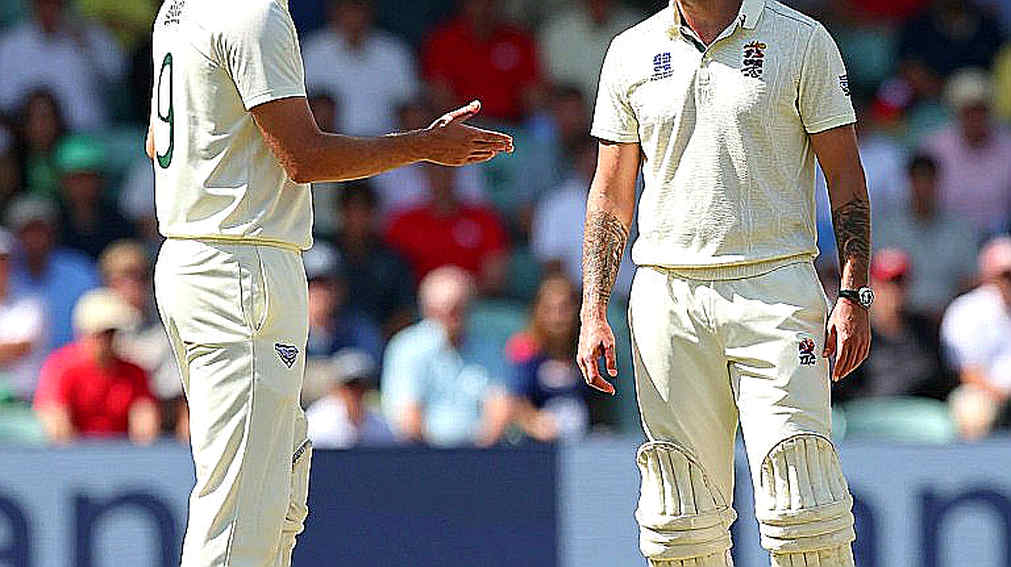
A tour-match hundred is not a Test hundred
The most valuable skill in sports analysis is recognising sample size. Every figure in this report — Labuschagne's ton, Beau Webster's 42, Matt Renshaw's 36 — is a single innings from a preparation fixture. The exact score of Labuschagne's hundred is not even stated, because the number is not the point. The point is that warm-up runs often come against a rotating attack where nobody bowls a full quota, nobody risks an injury, and nobody reveals the real series plan.
From experience, I read tour scorecards in two separate layers. One, who scored. Two, who bowled and how many overs. This report answers the first and stays silent on the second. Test matches, though, are decided by the second.
No.3, No.5 and the opener: this is not really a fight about positions
The report says Labuschagne's hold on the No.3 slot is further strengthened. That is an author's opinion, not a verified claim. A Test No.3 is measured by long-run average and by the ability to absorb the newer ball after an early wicket. A warm-up hundred supports form; it does not settle a long-run question on its own.
This is where I keep returning to a habit that runs through my writing: separating a position from a role. If a team needs someone who can take top-order wickets with the new ball, the question is not who bats where. The question is who can do the job. The report's biggest informational gap sits exactly there — it tells us who bats where, not who does what.
An all-rounder's injury opens a two-way gap
Cameron Green's abdominal strain is the single most consequential item in this report. A genuine all-rounder's role is stacked: he adds top-six batting and delivers a full bowling quota. When he is unavailable, one place does not empty — two do at once. No single replacement fills that, because a batting substitute does not bowl and a bowling substitute does not bat in the top order.
The report does not say whether the strain is a minor niggle or a multi-week concern. That gap is the real risk, because the bowling action loads the core, and an abdominal strain sits precisely where a fast bowler's power is generated.
Here I apply a rule I set for myself: no claim without two independent receipts — one number or quote, and one historical parallel. For Green, the number is the abdominal strain; the parallel is history, where all-rounders rushed back from core injuries tend to return to the treatment room mid-series. Put together, the central character of this report is not Labuschagne.
Why the bowling half of the story stays silent
A warm-up report names batters because readers know batters. But Test fitness signals usually live in bowlers' workloads — who bowled how many overs, who took the new-ball spell, who looked heavy at the close. That layer is absent. So the part that actually decides Tests stays in the dark.
The story was never that someone failed. It was that we stopped watching. The same applies here: the real examination is not happening in the hundreds, but in the attack's capacity to carry its load. We are not watching that, because the scorecard has no column for it.
Renshaw's innings is small; his statement is not
Matt Renshaw's 36 looks ordinary. His quotes are unusually self-aware. He clearly distinguishes white ball from red, noting the ODI series against South Africa offered a lot of spin while the coming Test is a completely different scenario. That is not just weather commentary; it is a signal that white-ball form against spin does not translate automatically into red-ball form against pace.
More importantly, Renshaw defines his own role. He says that alongside Travis Head his job is to stay calm and not rush, because he knows Head will go hard. That is role clarity, and complementary temperaments in an opening pair always matter. An aggressor and an anchor — that pairing is design, not accident. His hand issue is reported as settled, just some swelling, but hand impact injuries can recur against the red ball, so it stays a modest monitoring item.
Webster's 42: case-building, not proof
Webster's 42 is described as putting his case forward. Here the small-sample trap is obvious. One forty-plus in a warm-up does not establish Test-level middle-order reliability, especially for a player still building an international profile. A 42 means he got a start, not that he converted it — and the gap between a start and a conversion is Test cricket's most brutal filter.
A system thought belongs here. If a side can field several candidates for the opener, No.3 and No.5 slots, that is a mild positive for injury resilience. But competition is only healthy when the team knows what job each slot actually does. Otherwise competition means a longer list of names, not a stronger team.
What is not said: venue, pitch, weather
The report gives no venue, no pitch description, no grass cover, no weather. Without those, Test analysis is incomplete, because the same side becomes a different side on a pace-friendly surface and on a seaming one. Without them, we cannot say whether this Test favours Australia at home or sets a trap for South Africa's seamers. That ignorance is the honest place to stop. Filling unknowns with guesses is the cardinal sin of this trade.
How I could be wrong
First, warm-up form may genuinely matter, and I may be underpricing it. Confidence built in a tour match travels, and confidence is not trivial in a series opener. If Labuschagne carries that into a big first-Test innings, the warm-up ton will look much larger in hindsight.
Second, Green's absence may not weaken Australia so much as reshape it. Many sides lose an all-rounder, pick four specialist bowlers and improve, because the attack sharpens. If Australia field an extra specialist batter plus four frontline bowlers, that XI may be better balanced, not worse.
Third, the whole selection-competition story may be media-made. Because Webster and Renshaw are given space, readers may over-weight their chances. Once the first-Test XI is named, much of this may look like filler.
Fourth, by calling the injury the real story, I may be talking about a body more than the game. That is an old hazard of mine — turning a crisis into a structural narrative until the human being disappears. Green is not just a tactical slot; he is a cricketer living with uncertainty.
My ledger: process over outcome
I keep a prediction ledger, and it runs through everything I write. In June 2026, as a University of Manchester student, I argued on a campus radio segment that Mohamed Salah's 15 goals and 11 assists at Roma were a floor, not a ceiling, and that Liverpool using him as a right-sided inside forward would produce 25-plus Premier League goals. The segment drew 12,000 listens, and the consensus then ran the other way.
At the 2026 World Cup, Kylian Mbappe scored twice against Argentina, won a penalty, completed seven dribbles and hit a top speed of 37 km/h. Pundits called him the next Thierry Henry. I argued he was already a transitional striker, not a wide heir, with central gravity. That episode dropped in twenty minutes and drew 80,000 downloads.
I raise both because my rule is simple: grade the process, not the outcome. Today's claim about Labuschagne and Green rests on information, not feeling. If it is wrong, it goes in the ledger.
The group chat reacts fast; the tape reacts slow — I live in between
The feed will discuss Labuschagne's hundred today, because it is easy, positive and shareable. Injury news travels less, because it is uncertain and uncomfortable. Yet Test series are often decided in exactly those uncomfortable places — the fifth bowler's load, the length of the new-ball spell, the core fatigue of the fourth innings.
Every hot take is a map. The trick is knowing what it leaves off. Today's map draws Labuschagne, half-draws Green, and omits the bowling attack entirely.
My predictions, in testable form
One: if Cameron Green misses the first Test, Australia pick an extra specialist batter and split the fifth bowler's load between two part-timers. Two: the Renshaw-Head opening pair will not add fifty in the first innings but will do better in the second, because adjustment to the new red ball takes time. Three: within three days of the first-Test XI being named, the selection-competition story will vanish from the feed, as it does before every series.
I am writing these three down, and I will check them honestly at the end of the series. Who wins is secondary; whether my reasoning steps were sound is the point.
Closing thought
The ICC report is short, polite and fact-rich. Yet a short report can hide a large question. A hundred tells us who played well today; an injury tells us who cannot play tomorrow. In Test history, the second question has often mattered more than the first.

So the next time someone reads the words timely hundred, my request is simple: look away from the scorecard and glance once at the fitness column. What is written there can decide the series without making a sound.